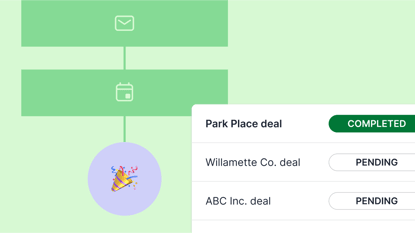
Vendor relationship management software is crucial as your company grows. Some types support you in specific areas, like contracts or onboarding. Other all-in-one platforms handle the entire lifecycle, from reaching out to renewals.
In this post, you’ll learn how to choose the right software based on your company’s unique needs to maintain valuable, long-lasting supplier relationships.
Key takeaways for vendor relationship management software
Vendor relationship management software centralizes supplier data, contracts, performance tracking and risk management.
While vendor relationship management software helps teams stay organized and reduce risk, complexity and cost can increase for larger or specialized platforms.
To succeed with vendor relationship management software, choose a tool that aligns with your company’s size and goals.
Pipedrive is a simple, yet powerful, CRM for managing the entire vendor relationship lifecycle – try it free for 14 days.
Which vendor relationship management software is right for me?
Vendor relationship management (VRM) software helps businesses manage everything from supplier data to contracts, procurement, performance, onboarding and risk.
Tools can cover the entire supplier lifecycle (from first to final conversations) or focus on one specific area, like contract management.
Note: You may also see this process referred to as supplier relationship management (SRM).
Pipedrive is an example of an all-in-one vendor management system for SMBs:

As supplier ecosystems grow, manual processes become hard to manage. VRM software creates consistency and accountability.
Instead of juggling spreadsheets and email threads, teams get structure and visibility to:
Keep third parties happier and reduce risk
Standardize onboarding and track contract renewals
Improve supplier performance and control spend
According to State of Flux research, 70% of procurement and supply chain professionals feel that solid vendor communication also leads to delighted customers.
There isn’t just one type of vendor management solution. The main categories include:
Customer relationship management (CRM) tools
Procurement and spend management platforms
Supply chain management systems
Contract lifecycle management (CLM) software
Third-party risk management platforms
Supplier onboarding and automated portal solutions
Vendor performance management software
Many of these tools also include built-in AI features to speed up workflows and remove repetitive tasks.
7 best vendor relationship management software solutions: a quick overview
The best software helps you handle a specific element of vendor relationship management or the entire lifecycle.
Some tools focus on areas like procurement or compliance. Others cover the entire partnership from negotiating to contract renewals.
Below is a quick comparison to see which tool fits your organization:
Vendor relationship management software | Who it’s best for |
Pipedrive | SMBs who want CRM-based vendor tracking and relationship management |
Coupa | Large enterprises requiring comprehensive procurement and spend management |
SAP | Organizations with complex supply chains that need end-to-end visibility |
Ivalua | Teams wanting AI-powered procurement and purchasing automation |
Precoro | Growing companies that need automated vendor onboarding portals |
Gatekeeper | Compliance-heavy businesses looking for risk management capabilities |
Ironclad | Specialized teams needing full contract lifecycle management |
To make evaluation easier, this guide clearly categorizes each tool by type and best-fit user.
1. Pipedrive: best comprehensive vendor relationship management software for SMBs
Pipedrive is an all-in-one CRM software that organizes supplier contacts, communication and deals in a simple, visual interface.
It’s perfect for SMBs that need a flexible, user-friendly system to track vendor relationships without overcomplicating workflows.
For example, custom pipelines help you track interactions to see every relationship at a glance:

Monitor progress through stages like “Onboarding”, “Contract Negotiation” or “Renewal” and quickly spot bottlenecks.
Create custom fields to store contract details, payment terms and internal notes:

Centralizing these crucial details makes it easier to reference agreements and avoid miscommunication.
For contract management, the Smart Docs feature also lets you collect eSignatures and keep documents and deals moving, saving time on both sides.
Pipedrive’s key features include:
Contact and supplier information management. Maintain a centralized repository for all vendor details to reduce lost emails and scattered spreadsheets.
Deal and pipeline tracking. Visualize each stage of your vendor engagement to prioritize actions and forecast upcoming renewals or approvals.
Automated reminders and follow-ups. Schedule notifications for contract renewals, pending approvals or key meetings to ensure nothing slips through the cracks.
Reporting and analytics dashboards. Monitor all crucial metrics from vendor performance tracking to communication activity to make data-driven decisions.
Integration with your favorite third-party tools. Streamline workflows by connecting communications and deadlines directly to apps your team already uses.
Pipedrive provides SMBs with a straightforward, all-in-one solution for efficiently managing relationships. Use it to keep teams aligned, organized and proactive across every stage of the vendor lifecycle.
Pipedrive in action: Pipedrive helped logistics company Boost Transport win $5 million in six months. Automating daily workflows allowed the team to focus on building relationships and managing performance to drive more sales.
2. Coupa: best vendor performance management software for large enterprises
Coupa helps large organizations managing hundreds or thousands of vendors oversee performance, procurement and spend.
By tracking vendor data and spend patterns at scale, companies stay efficient while controlling costs across multiple departments.
For instance, Coupa helps enterprises monitor KPIs like delivery timelines, contract adherence and service quality:

Management can use these reports to spot high-performing suppliers and address disruptions.
Spend analysis tools also track procurement activity across departments and regions. Companies can uncover cost-saving opportunities while adhering to budget and policy guidelines.
Coupa’s key features include:
Procurement and spend management to oversee budget control and supplier expenses
Vendor performance monitoring (e.g., delivery, compliance and quality) to keep service standards consistent
Compliance and risk alerts to meet regulatory and contractual obligations
Integration with finance and enterprise resource planning (ERP) systems to connect procurement and existing workflows
Real-time insights for procurement teams to set benchmarks and inform decision-making
Coupa’s comprehensive framework keeps vendor performance and spending accountable and compliant across supplier networks.
3. SAP: best for scalable supply chain management
SAP is an enterprise resource planning (ERP) solution that combines supplier management, procurement and contract workflows for complex global operations.
Note: While SAP Ariba used to handle supply chain management, it’s now part of the wider SAP ecosystem.
Functionalities vary depending on the SAP plan and suite. However, one of the brand’s latest updates embedded AI into every cloud-based solution.
Joule Agents’ AI-powered insights help cross-functional departments analyze and act quickly. For example, a disruption alert becomes a summary of actions taken and suggested next steps:

Organizations can monitor end-to-end supplier relationship management from ordering raw materials to final delivery.
Key features of SAP’s supply chain management include:
Source‑to‑pay automation that combines sourcing, purchasing, invoicing and payment flows in one system
Supplier profiles and onboarding that centralize vendor information like contact details, registration status, qualifications and risk management data
Guided buying experiences for employees, including policy‑aware catalogs and approval workflows
Contract management tools for document creation, approval tracking and compliance monitoring
Reporting and analytics based on performance metrics, procurement trends and spend categories
SAP helps large enterprises handle complex global workflows with detailed visibility and control.
4. Ivalua: best for AI-powered procurement and purchasing automation
Ivalua is an AI-driven procurement platform for businesses that want to streamline purchasing and supplier engagement at scale.
It offers intelligent automation throughout the procurement lifecycle, from intake and sourcing to contract and purchase order management.
Ivalua’s AI agents assist across tasks, pulling data from a single source of truth for more trusted insights:

There are also no-code and low-code variations for companies that need more flexibility as operations evolve.
By linking people, data and procurement processes, teams gain visibility and reduce friction from sourcing to approvals.
Ivalua’s key features include:
Agentic AI to automate workflows like intake management, bid evaluation and requisition processing
A unified data model to keep supplier and spending data consistent across modules
Standardized sourcing events and recommended compliant purchasing paths
Supplier risk and compliance tracking that stores certification, performance and compliance signal information
Real-time reports on spend patterns, supplier performance and procurement outcomes
Ivalua’s AI-driven automation helps companies accelerate and reduce manual tasks over the source‑to‑pay lifecycle.
Download your free business continuity plan template
5. Precoro: best for automated onboarding portals for growing teams
Precoro is a cloud-based procurement and spend management platform for growing, multi-entity companies.
It offers structured supplier onboarding and standardized processes without the complexity of an enterprise-grade system.
Precoro supports consistent data collection and approval routing as vendor volumes increase.
For example, self-service portals let suppliers submit registration details, upload invoices and manage purchase orders directly:

Custom onboarding forms and approval workflows also allow teams to define required documents and route submissions through structured approval paths.
Precoro’s key features include:
Configurable supplier onboarding forms and rules that standardize how companies register and approve vendors
A single searchable system to store vendor records, documents and transaction history
Purchase order and invoice management to track buying activity from request to payment
Budget controls that set spending limits and approval thresholds to reduce unauthorized purchases
Procurement data sync with finance tools to maintain accurate records and reduce duplicate entry
Precoro’s structured onboarding workflows help scaling teams maintain control as supplier relationships expand.
6. Gatekeeper: best for vendor risk management and compliance tracking
Gatekeeper is a risk and vendor management tool for centralized control of third-party relationships.
Compliance-heavy businesses (e.g., financial and pharmaceutical) need more visibility into risk and regulatory obligations than most. Gatekeeper helps teams monitor risk signals and enforce policy requirements.
Features like risk scoring and assessment tools evaluate vendors against configurable criteria, helping identify and prioritize potential problems before they escalate:

The system also tracks required compliance documentation (e.g., certifications or audits) and notifies stakeholders when items are missing or about to expire.
Gatekeeper’s key features include:
Vendor risk assessments with information and scorecards for structured evaluation and segmentation
Contract and obligation tracking of terms, renewal dates, milestones and more
Automated alerts and renewal reminders for upcoming expirations, missing documents or policy triggers
Document storage and audit trails to maintain records and change history for compliance reviews
External data feed integration that pulls risk signals from third-party providers
Gatekeeper helps teams identify potential exposure and support consistent governance across scaling vendor relationships.
7. Ironclad: best for specialized contract lifecycle management
Ironclad is a CLM platform that centralizes every stage of contract lifecycles (from creation to storage) in a single system.
Specialized teams (e.g., legal or procurement) need airtight workflows tailored to each agreement stage.
Ironclad’s contract management tool reduces manual coordination as contract volume grows.
For instance, automated processes help teams track each agreement’s progress through review and approval processes, reducing bottlenecks and improving accountability.
The clause and template library also contains pre-approved language for consistency across contracts:

Ironclad’s key features include:
Structured templates and clause libraries that support drafting and standardized agreements
Predefined workflows to move contracts through review and sign-off stages without manual follow-up
A searchable database that stores executed agreements and metadata
Version control and audit history to track revisions and maintain clear records of changes
Integrations with CRM and procurement systems to connect legal and operational processes
Ironclad’s intricate contract management capabilities help specialized teams create strict, scalable workflows.
How to choose the best vendor management solution for your unique needs
The best vendor management tool depends on your company’s size, business needs and other specifics like budget or industry constraints.
For example, a platform that works well for a four-person team may not suit a global enterprise with layered approvals and strict compliance needs.
Here are some of the most crucial considerations for choosing a vendor management solution:
Factor | What to consider |
Company size | Smaller teams often benefit from intuitive tools with minimal setup and fast onboarding. Larger organizations may need advanced permissions and stronger governance controls. Prioritize user experience (UX) that suits your team to reduce learning curves and improve adoption. |
Vendor complexity | If vendor relationships are simple, lightweight tracking may be enough. If suppliers need risk scoring and multi-stage approvals, look for advanced capabilities. |
Internal procurement maturity | Early-stage procurement teams may need guided buying and basic approval flows. More mature functions could require automation, sourcing tools, analytics and supplier segmentation. |
Budget | Compare pricing models carefully, including per-user costs, implementation fees, integrations and add-ons. Ensure your chosen tool scales without large cost jumps as vendor count grows. |
Industry regulations | Regulated industries may require audit trails, document retention controls, certification tracking or sustainability reporting capabilities. Choose software that supports compliance requirements relevant to your sector. |
Integration requirements | Ensure the platform integrates with the third-party apps you need (e.g., an ERP or accounts payable systems) to optimize workflows and prevent data silos. Contract-heavy teams may also require CRM or procurement integrations. |
Once you’ve considered these factors, you can further clarify what to look for by identifying the primary bottleneck in your current vendor management processes. Select the tool category designed to solve that specific challenge.
Keep the scope of your needs in mind as well. Don’t pay for features you don’t need. For smaller teams to mid-sized companies, a CRM is often ideal for centralizing relationship data and creating custom workflows.
Final thoughts
Vendor relationship management software helps companies centralize supplier data, streamline approvals, monitor performance and reduce risk.
Some businesses may benefit from CRM-style tools like Pipedrive. However, enterprises with complex compliance needs may need specialized or ERP platforms.
Try Pipedrive free for 14 days to learn how to handle all vendor relationships within one simple, powerful CRM system.