

Affiliate sales can be a powerful way to grow revenue by turning trusted partners into a repeatable sales channel.
When managed well, affiliate programs help small businesses reach high-intent buyers, shorten sales cycles and scale without adding headcount. The challenge is that many teams treat affiliate sales like a side marketing effort, which limits performance and makes results inconsistent.
The guide breaks down what affiliate sales are, why most programs struggle and how to build a scalable affiliate revenue engine for your SMB.
Key takeaways from affiliate sales
The strongest affiliate sales programs treat affiliates as revenue partners, not just marketing channels.
Affiliate sales perform best when teams track real impact instead of relying on clicks or surface-level referral metrics.
Affiliate success depends more on partner quality and buyer intent than on audience size.
Sign up for a free 14-day trial of Pipedrive to turn your affiliate sales program into a repeatable revenue channel.
What are affiliate sales and how do they differ from affiliate marketing?
Affiliate sales partners focus on driving actual revenue rather than generating traffic or surface-level engagement.
Traditional affiliate marketing programs, like Amazon’s affiliate program, prioritize reach and clicks, with many teams measuring success by traffic instead of real impact.
Here’s a clear comparison to show how affiliate sales and affiliate marketing differ:
Affiliate sales | Affiliate marketing |
Focuses on qualified leads and revenue. | Focuses on traffic, clicks and reach. |
Optimized for lead quality and conversion. | Often optimized for volume. |
Common in SaaS, B2B and high-consideration sales. | Common in content-heavy or e-commerce models. |
Measures success by pipeline and closed deals. | Measures success by clicks or sign-ups. |
Affiliates act as revenue partners. | Affiliates act as promoters. |
Direct alignment with the sales process. | Limited connection to the sales team. |
These differences matter because traffic alone does not drive sustainable growth. Revenue does.
The right sales affiliates can extend your digital marketing efforts and revenue streams by reaching buyers you normally couldn’t access.
Affiliate sales work best when purchases require confidence and thoughtful decision-making. B2B SaaS companies, retailers, e-commerce brands and service providers particularly benefit as buyers value guidance throughout the journey.
Example: Many SaaS companies set up affiliate sales programs to work with entrepreneurs, agencies and educators who already advise their target buyers. These partners influence purchasing decisions and earn commissions based on closed revenue, not clicks or traffic.
When teams blur the line between affiliate marketing and affiliate sales, they expect revenue without a clear strategy. Sales affiliates then lack the structure and insight needed to influence high-intent buyers.
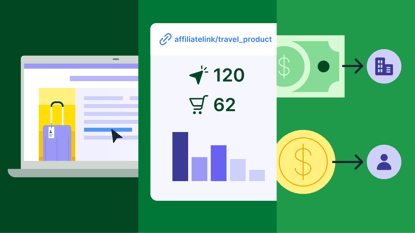
Why many affiliate sales programs fail
At a high level, affiliate programs fall short when no one owns the program, partners lack guidance and teams don’t measure performance against revenue.
Specific problems include:
No single party responsible for sales affiliate performance
Little to no onboarding or training
Metrics that emphasize clicks instead of revenue
Incentives that favor volume over lead quality
Limited coordination between affiliates and sales
Without a single owner accountable for affiliate performance and results, programs lose focus. Without enablement, affiliates struggle to send qualified leads. Without revenue-focused reporting, teams cannot tell what actually drives growth.
Many people associate affiliate sales with passive income, but the strongest programs treat it as an active, performance-driven revenue channel.
Affiliate sales require the same discipline and performance mindset as direct sales or channel partnerships.
How to treat affiliate sales like a real sales channel
Sales affiliate programs perform better when companies manage them with the same rigor as internal sales efforts.
Below are seven best practices to manage your own affiliate program effectively.
1. Become a dedicated owner of affiliate sales
Proper affiliate management starts with assigning a dedicated owner who oversees recruitment and onboarding.
They are also responsible for performance tracking and partner communication. One accountable leader helps maintain momentum and consistency.
Example: Some B2B companies run dedicated affiliate sales programs with a single owner responsible for onboarding, performance tracking and partner communication. Affiliates enter the CRM as a defined lead source and teams evaluate success based on pipeline contribution and closed deals rather than referral volume.
Measure success using sales revenue-focused metrics rather than surface-level activity. For instance, pipeline health, customer conversion rates and deal outcomes provide a clearer picture of real impact.
Affiliate workflows should connect directly to your sales funnel so partners understand what happens after they refer a lead. When affiliates can see how prospects enter your CRM and move through the pipeline, they gain better context on what drives closed deals.
Treating affiliate sales like a real performance marketing channel requires structure and visibility.
Pro tip: Use a CRM like Pipedrive to track affiliate leads, follow deal progress and measure partner performance in one place without relying on spreadsheets or manual reporting.
2. Recruit the right affiliates
The best affiliates already serve the target audience you want to reach, so working with them is a win-win situation.
Note: The size of an affiliate’s audience isn’t the top priority. A smaller but highly relevant audience will likely outperform a larger one with weak alignment. What matters most is trust and buyer intent. Strong affiliates influence real purchase decisions rather than just draw attention.
The best affiliates often bring a dedicated audience. Many already have an engaged email list they use to educate buyers and recommend tools they trust.
High-quality partners come from industries or communities that already serve your ideal customers.
When evaluating potential affiliates, look for things like:
How clearly they communicate value
How well they understand your market
Whether their audience actively trusts their recommendations
It’s essential to set expectations and guidelines up front to reduce confusion later. Clarify commission rates and lead qualification standards so affiliates understand what success looks like.
For beginners, clear onboarding and simple guidelines make it much easier to start generating affiliate sales without feeling overwhelmed.
When genuine affiliates buy into your expectations and guidelines, performance improves significantly. A smaller group of committed affiliates will outperform large affiliate networks of disengaged partners.
3. Enable affiliates to drive better sales
How well you enable your affiliates determines whether they generate qualified opportunities or just drive traffic.
Recruiting is the starting point, but that alone doesn’t drive results. Affiliates perform better when they understand your product clearly and have tools that support real selling.
Strong affiliate onboarding sets the foundation for consistent performance. From the start, affiliates need clear guidance on who your product serves, the problems it solves and why buyers choose it over alternatives. Sharing real customer examples and common onboarding questions helps partners speak with confidence about your product.
Your onboarding should also address how to position different offers, since conversion rates often vary by product category and price.
Helpful support resources for sales affiliates include:
Outreach templates
Messaging frameworks
Case studies
Demo training
Step-by-step tutorials
Dedicated landing pages
Affiliate sales networks do much better when communication stays consistent. Ensure regular performance updates, product announcements and campaign ideas to keep partners engaged.
Pipedrive in action: Pipedrive’s own affiliate sales program highlights how structure and automation can improve partner management at scale. Pipedrive’s affiliate team faced challenges from manual processes, scattered tools and poor partner communication while managing applications and outreach.
By connecting PartnerStack with Pipedrive Automations and Campaigns, it consolidated affiliate data in one place, cut administrative workload by 80% and doubled the number of partner applications it could process each month.
5. Track affiliate sales performance
Affiliate programs improve when you track revenue impact instead of surface-level activity.
Performance data helps you optimize affiliate partnerships and focus on the channels that drive real returns.
Effective tracking connects affiliate referrals to pipeline movement and closed deals. While it’s fine to give some attention to traffic, focus more closely on how affiliate leads perform throughout your sales process.
Monitoring sales metrics such as conversion trends and revenue generated per affiliate helps you rank affiliates based on actual business impact rather than referral volume.
For instance, tracking cost per acquisition (CPA) alongside leads and revenue helps teams understand how cost-efficient affiliate sales really are.
Over time, patterns will emerge that help you prioritize the right relationships. For example, you may notice that a handful of affiliates consistently drive higher quality deals while others generate volume with little revenue impact.
Pro tip: Use Pipedrive Insights and reports to track affiliate performance so you can quickly identify high-converting partners and focus on who is driving real revenue.
6. Structure high-value incentives and commissions
Commission models shape affiliate behavior more than most teams expect.
Flat payouts often encourage low-intent referrals because affiliates earn the same commission regardless of lead quality. That pushes partners to prioritize volume over fit, resulting in more leads but fewer meaningful sales conversions.
Instead, design incentives that reward deal quality and long-term customer value.
Tiered commission structures work best when incentives align with the outcomes you want affiliates to prioritize. Different commission models encourage different behaviors, as shown below:
Commission approach | What it encourages |
Tiered commissions | Motivates affiliates to improve performance over time as payouts increase with results. |
High commissions on larger deals | Shifts focus toward stronger lead quality and higher-value opportunities. |
Recurring commissions | Encourages affiliates to attract customers who stay longer and generate ongoing revenue. |
It’s also essential to clarify attribution rules upfront, so affiliates understand how you’ll assign credit when multiple channels influence a deal. Transparency with your partners builds trust and prevents friction.
Download Your Guide to Sales Performance Measurement
7. Scale affiliate sales without losing control
Affiliate programs can scale more effectively when teams put structure in place before expanding.
To maintain quality as volume grows, focus on a few core practices:
Standardize onboarding and expectations to maintain quality as affiliate volume grows
Use playbooks and training resources so every affiliate receives consistent guidance from day one
Scale recruitment deliberately by deepening relationships with top partners instead of onboarding at scale
Reliably track lead quality as you expand to ensure new affiliates contribute real revenue, not low-intent traffic
Scaling should increase predictable revenue from strong performers, not water down results by shifting attention away from your best affiliates.
Managing affiliate sales with Pipedrive
Affiliate sales work best when you manage partners as a structured revenue source within your CRM rather than as informal referrers.
Pipedrive makes this happen by helping you organize affiliate leads, track attribution, monitor performance and automate follow-up using native CRM features.
Treat affiliates as a dedicated lead source or partner type
You get stronger attribution when affiliates live in your CRM as a defined category rather than an untracked referral source.
Pipedrive lets you create custom fields to tag deals, contacts and organizations, which is ideal for labeling affiliates or partner categories.

Deal labels enable you to visually tag and segment deals, which works well for identifying affiliate-sourced opportunities.

Together, fields and labels make it much easier to organize affiliate deals and track partner performance at scale.
Track affiliate-driven deals from referral to close using pipelines
Affiliate revenue becomes more predictable when every referred lead moves through a clearly defined pipeline.
Pipedrive offers multiple customizable pipelines to help you route affiliate leads into a dedicated flow or tag them within an existing pipeline.

Your visual pipelines allow you to monitor stage progression, identify bottlenecks and understand how affiliate deals convert over time.
Link affiliates to deals, organizations or custom fields
Revenue attribution improves when affiliate relationships connect directly to deal and contact records.
With Pipedrive, you can link deals directly to people and organizations, enabling you to target affiliate partners with specific revenue records.

With this setup, you get clear visibility into which partners drive revenue and which relationships deserve more investment.
Monitor affiliate performance with reports and dashboards
Affiliate programs improve faster when teams can see revenue trends and partner performance in real time.
Pipedrive includes custom reporting and visual dashboards that allow you to track affiliate-sourced pipeline value, conversion rates, win rates and revenue contribution.

These reporting and dashboard insights make it easier to identify top-performing affiliates and adjust strategy when performance dips.
Automate faster follow-up on affiliate leads
Affiliate conversion rates improve when sales teams respond quickly to referred prospects.
With Pipedrive’s workflow sales automations, you can assign deals, trigger follow-up tasks and move leads through pipeline stages automatically.

Implementing automations allows you to prioritize affiliate leads and reduce response time, boosting close rates.
Final thoughts
Affiliate sales become more predictable when companies treat affiliates as true revenue partners rather than a side channel.
Programs perform far better when partners receive clear support, strong enablement and meaningful performance tracking. Plus, with the right structure in place and a CRM that supports visibility and accountability, affiliate sales can generate steady, scalable revenue over time.
To give your affiliate sales program the structure and support it needs, sign up for a free 14-day Pipedrive trial today.